CARDIOLOGY · NEUROSCIENCE · CONSCIOUSNESS
Heart and Brain: Unexpected Connections
From neurocardiology to consciousness: the hidden dialogue that influences emotions, health and our perception of ourselves.
Prof. Massimo Fioranelli · Beyond Medicine
For centuries, we have attributed a monopoly on thought, emotion and consciousness to the brain, relegating the heart to the role of an extraordinary but essentially passive muscular pump. Yet the heart has never been only that. Anyone who has experienced fear, love or anguish knows how the heartbeat participates in that experience. Today, we know that the heart does more than receive information from the brain: it continuously sends signals that contribute to the regulation of brain activity and the construction of bodily experience.1
The heart’s small nervous system
The heart has an intrinsic nervous system consisting of neuronal networks organised predominantly in epicardial ganglia. It includes sensory neurons, interneurons and efferent neurons capable of processing local information and modulating cardiovascular responses. This is not a second brain in the ordinary sense: there is no evidence that the heart independently produces thoughts or conscious experiences. Nevertheless, this network has capacities for integration, adaptation and plasticity, and participates in regulating the heart’s electrical and mechanical activity.2
The brain continually listens to the heart
The autonomic nervous system is one of the principal communication pathways between the heart and brain. Through its sympathetic and parasympathetic components, the brain modulates cardiovascular function. But communication also travels in the opposite direction: signals from cardiovascular receptors reach the brainstem and influence circuits involving the insula, cingulate cortex and prefrontal networks. The perception of signals arising within the body is called interoception.3 The brain also interprets the world through what happens inside the body.
Heart rate variability: a window onto autonomic regulation
Heart rate variability, or HRV, describes fluctuations in the intervals between consecutive heartbeats. Some of its components reflect vagal modulation and have been studied in relation to the flexibility of physiological, emotional and cognitive regulatory systems. The neurovisceral integration model proposes that circuits involved in cardiovascular control also participate in regulating emotions and executive functions.4 This does not mean that a high HRV value automatically indicates better mental health: age, breathing, medication and clinical conditions influence its interpretation.
Emotions do not reside in a single organ
Cultural tradition has set the heart against reason. Neuroscience suggests a different picture: emotions emerge from interactions among brain processes, bodily signals, memory, experience and the environment. Antonio Damasio has emphasised the relationship between the representation of bodily states and the construction of feelings.5 The body is not merely where emotions manifest themselves: it is also a source of information through which the brain helps construct them. It is inaccurate to say that the heart is the seat of emotions; it is well founded to recognise that cardiovascular signals participate in processes that regulate and represent the state of the organism.
From the heartbeat to consciousness
What does it mean to feel present to oneself? Research on interoception shows that visceral signals can modulate brain activity associated with perception, emotions and the representation of the bodily self.6 This remains an open field: we cannot maintain that the heart generates consciousness. We can, however, recognise that bodily awareness involves the processes through which the brain receives and interprets information from the organism. Understanding conscious experience may therefore require more than studying the brain as an isolated structure.
Towards a medicine that reunites what it has separated
Specialisation has enabled extraordinary advances in medicine, but it sometimes risks fragmenting what remains integrated in biological reality. Bidirectional interactions between the heart and brain are becoming increasingly relevant in physiology and disease.7 Cardiovascular diseases can influence neurological health; neurological conditions and autonomic disturbances can affect the heart. This does not mean abandoning evidence-based medicine, but broadening clinical observation. Treating an organ is necessary. Understanding the person in whom that organ lives is equally important.
The Brain Within the Heart: a different perspective
These reflections also underpin the approach developed in my book Il cervello nel cuore (The Brain Within the Heart). The title does not suggest that the heart possesses an autonomous mind; it draws attention to its complex neural organisation and continuous dialogue with the brain. In the book, the scientific exploration becomes an opportunity to reflect on the relationship among the body, emotions, health and consciousness. Perhaps the most interesting question is not whether the heart thinks. It is how much of the way we think, feel and exist depends on the silent dialogue the heart maintains with the brain. A human being is not a brain that possesses a body, but a living organism that constructs its experience through the integration of both.
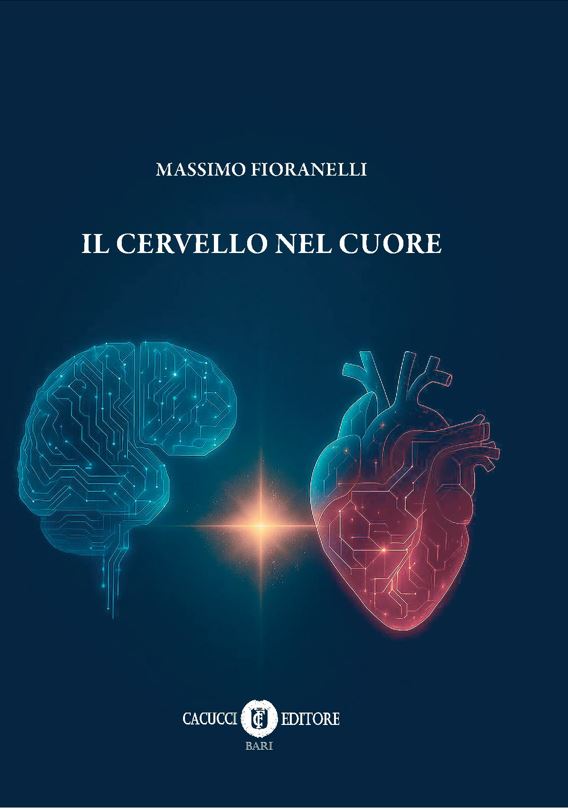
Explore The Brain Within the Heart
Massimo Fioranelli’s book on the dialogue between the heart, brain, emotions and consciousness.
Original Italian article · All English articles
Additional experimental context
The following research examples supplement the translated article.
What experiments show
In a 2014 experiment, Garfinkel and colleagues presented emotional faces at different points in the heartbeat. Fearful faces were detected more readily and judged more intense during systole, when the heart ejects blood, than during diastole. Brain imaging also showed differences in amygdala responses. This was a specific experimental effect on threat processing, rather than evidence that every emotion follows the same pattern.8
A 2020 study combined ECG and EEG recordings while 37 participants tried to detect weak electrical stimuli on their fingers. Detection and localisation varied with cardiac timing; the investigators also identified a distinct influence related to heartbeat-evoked brain activity. These findings suggest that bodily signals help shape sensory processing, while leaving important questions about the mechanisms and their everyday significance.9
From physiology to clinical understanding
These studies help explain why an exclusively brain-centred description of experience can be incomplete. They do not establish that the heart has an independent conscious mind, nor do they validate a particular treatment. Laboratory findings about perception should be distinguished from evidence that an intervention improves symptoms or clinical outcomes.
For clinical medicine, the useful question is how to integrate cardiovascular physiology, emotional experience and the patient’s own account of illness. Palpitations or chest discomfort still require appropriate assessment; an interest in heart–brain interactions should not lead to symptoms being dismissed as purely psychological.
Further reading
Read the original article in Italian · Cardiovascular health guides
Explore Il cervello nel cuore · Understanding palpitations and arrhythmias · All English articles
Complete English translation of the Italian article, with additional experimental context. Updated 23 October 2026. References 1–7 are reproduced from the Italian original; references 8–9 support the additional research examples.
References
- Valenza G, Matić Z, Catrambone V. The brain–heart axis: integrative cooperation of neural, mechanical and biochemical pathways. Nat Rev Cardiol. 2025;22:537–550. doi:10.1038/s41569-025-01140-3.
- Giannino G, Braia V, Brookles CG, et al. The intrinsic cardiac nervous system: from pathophysiology to therapeutic implications. Biology (Basel). 2024;13(2):105. doi:10.3390/biology13020105.
- Craig AD. How do you feel? Interoception: the sense of the physiological condition of the body. Nat Rev Neurosci. 2002;3:655–666. doi:10.1038/nrn894.
- Thayer JF, Lane RD. Claude Bernard and the heart–brain connection: further elaboration of a model of neurovisceral integration. Neurosci Biobehav Rev. 2009;33(2):81–88. doi:10.1016/j.neubiorev.2008.08.004.
- Damasio A, Carvalho GB. The nature of feelings: evolutionary and neurobiological origins. Nat Rev Neurosci. 2013;14:143–152. doi:10.1038/nrn3403.
- Neurophysiological dynamics of visceral signals in emotion, self and bodily consciousness. 2025. PMID:40461074.
- Scheitz JF, Villringer A, Mikail N, Gebhard C, et al. Bidirectional brain–heart interactions in health and disease. Nat Rev Neurol. 2026;22:209–225. doi:10.1038/s41582-025-01180-w.
- Garfinkel SN, Minati L, Gray MA, Seth AK, Dolan RJ, Critchley HD. Fear from the heart: sensitivity to fear stimuli depends on individual heartbeats. J Neurosci. 2014;34(19):6573–6582. doi:10.1523/JNEUROSCI.3507-13.2014.
- Al E, Iliopoulos F, Forschack N, et al. Heart–brain interactions shape somatosensory perception and evoked potentials. Proc Natl Acad Sci U S A. 2020;117(19):10575–10584. doi:10.1073/pnas.1915629117.